

The United Nations Committee on Economic, Social and Cultural Rights recognizes everyone’s right to an adequate standard of living, including adequate housing. However, millions around the world live in life and health-threatening conditions, in overcrowded slums and informal settlements. These conditions do not uphold their human rights and their dignity. The epitome of the adequate housing problem is the African continent. Approximately 31% of adults from sub-Saharan Africa didn’t have enough money to provide adequate housing for themselves and their families in the recent past. This figure stands at 26% in Kenya.
The use of Interlocking Soil Stabilized Blocks (ISSB), can to a large extent address this challenge.
Interlocking Soil Stabilized Blocks (ISSBs) are blocks made from a mixture of soil and a stabilizer (cement or lime) that are compressed and interlocked using a machine. This method of construction has gained popularity in recent years, especially in developing countries, due to its affordability and sustainability.
ISSBs are made using soil, which is abundant and readily available in most parts of the world. The soil is mixed with a small amount of stabilizer to increase its strength and durability. The mixture is then compressed using a machine to produce a block.
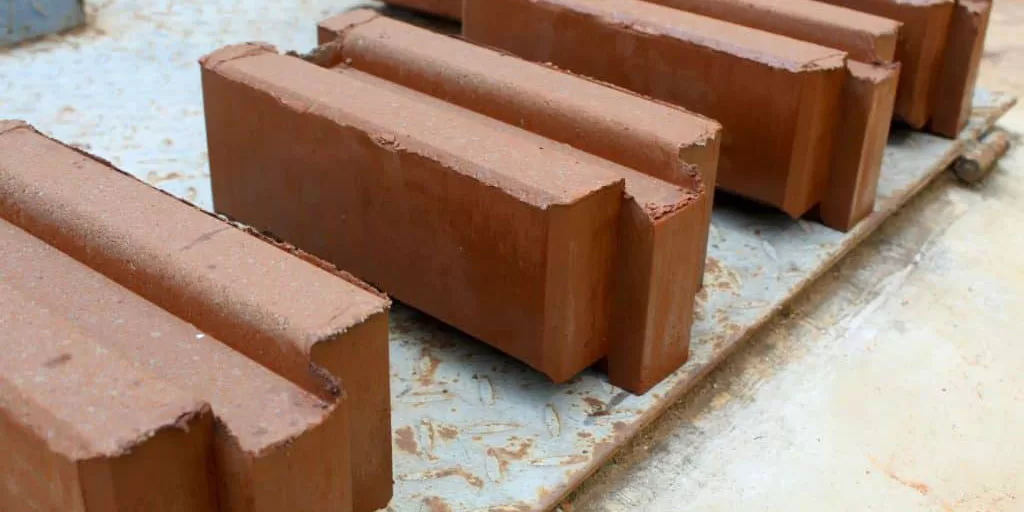
The interlocking design of the blocks allows them to be stacked together without the need for mortar, resulting in a strong and stable wall.
One of the key advantages of ISSBs is their affordability. The cost of producing ISSBs is significantly lower than that of traditional bricks or blocks made from materials such as clay or concrete. This makes them an ideal choice for low-cost housing projects and other construction projects where cost is a major concern. Due to their interlocking nature, ISSBs require no mortar for connection, further reducing on cost. Additionally, the interlocking blocks have an appealing appearance with an elegant profile, and in most cases do not require any plastering on the walls.
As ISSBs can be easily produced on-site, the need for transportation is eliminated, further contributing to lowering costs.
In addition to being affordable, ISSBs are also sustainable. They are made using locally sourced materials, reducing the need for transportation and minimizing the environmental impact of the construction process. The use of soil also reduces the amount of waste generated during construction.
The use of ISSBs leads to fast construction times, as the blocks are simply stacked together and require no curing/setting time. The following photos shows some of the ISSB profiles in the market.


ISSBs are also highly versatile. They can be used to construct a variety of structures, including houses, schools, and community buildings. They are suitable for both urban and rural settings and can be used in areas with limited access to traditional building materials.
The interlocking design of the blocks also makes them earthquake-resistant. The blocks are able to flex slightly during an earthquake, reducing the risk of collapse. This makes ISSBs an ideal choice for regions prone to earthquakes or other natural disasters.
Limitations of ISSBs
In addition to their many advantages, ISSBs also have some limitations. The blocks may not be ideal for use in areas with high groundwater levels, as the soil may become unstable and the blocks may shift or collapse. However, this limitation can be easily resolved by using quarry dust, the byproduct of quarrying operations, in place of soil. By replacing soil with quarry dust, not only does the builder address the limitation of water ingress and soil erosion, but it also leads to a stronger building block.
However, a proper mix design to determine the ideal cement content can mitigate the complications associated with water ingress and erosion of the blocks. A proper mix design would involve the addition of incremental amounts of cement to the soil sample and the determination of the maximum strength achieved by the soil sample after curing, ideally for 7 days. If constructing in areas that experience high groundwater levels or flooding, the soil samples can additionally be soaked for a few days before the determination of their strength and observation of their behavior. Upon constructing in such conditions, it is advisable that a waterproofing agent is applied on the building’s walls.
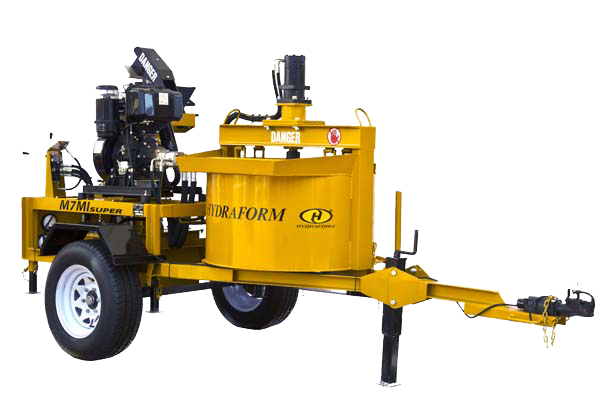
Another limitation of ISSBs is their production process. The blocks require a machine to compress them, which can be expensive and may not be readily available in all areas. This may limit the widespread adoption of ISSBs in certain regions. Apart from this challenge, most of the interlocking machines in the market are highly manual, requiring a lot of physical strength to produce the blocks. The good news is that this challenge is being addressed majorly through the mechanization of these machines, with powered machines (known as hydraulic press) commonplace in the market at the moment. On the issue of the availability of interlocking block press machines, a few companies are available within the Kenyan market, with some of them regularly advertising on the mainstream media.
Despite these limitations, the benefits of ISSBs make them an attractive option for many construction projects. They offer a sustainable and affordable alternative to traditional building materials and are suitable for use in a wide range of settings.
Factors to Consider when Using ISSBs
There are several factors to consider when using ISSBs for construction projects. One important factor is the quality of the soil used to make the blocks. The soil should be free from large stones, roots, and other debris that may affect the strength and stability of the blocks. In complex projects, laboratory analysis of the soils is necessary to determine the most suitable soil for use to make the blocks. The most important aspect in determining the suitability of soil for use in ISSB is the clay content. Soils with high clay content should not be used as this leads to the blocks cracking. If clayey soils must be used, additional processing of the soil is necessary, including the addition of a blending agent such as sand or quarry dust. Furthermore, a higher stabilizer content is required for clayey soils. As the clay content highly contributes to the final quality of the blocks, it is imperative that the determination of clay content is carried out before the block production begins. In rural areas with minimal access to soil labs, this determination can be done by simply using a wooden trough and observing the shrinkage and/or cracking of the soil sample upon drying. The more the shrinkage and cracking, the more the clay content on the soil sample.
Another important factor is the curing process. The blocks should be allowed to cure for at least 21 days before use to ensure maximum strength and durability. During the curing process, the blocks should be kept moist to prevent cracking.
The design of the structure should also be taken into account when using ISSBs. The blocks are suitable for use in both load-bearing and non-load-bearing walls, but the design of the structure should be carefully considered to ensure maximum stability and strength. It is always advisable to engage the services of a professional civil/structural engineer, registered with the Engineers Board of Kenya (EBK) when constructing any structure.
The type of stabilizer to use in producing the block is also another factor to consider. Cement is best used with soils that have low clay content to achieve greater strength quickly. Lime is recommended for high-clay content soils but takes longer to harden and to produce strong blocks. With the low supply and challenges associated with lime, cement has been the dominant stabilizer in the market. Apart from the addition of stabilizer in the mix, fibrous material such as dried grass(without any other deleterious material) or synthetic fibers can be introduced in the mix as reinforcers, to improve the final product strength.
In order to ensure that the block achieves a maximum density hence maximum strength, some water is added to the mix. For complex projects, the ideal quantity of water, referred to as the optimum moisture content at maximum dry density (OMC at MDD) in technical terms, can be determined in the laboratory. In rural setups with limited access to complex laboratories, the amount of water added to the mix can be estimated. However, care should be taken not to add too much water to the mix. Generally, the soil should be moist and not too wet. As a rule of thumb, no water should run through the fingers when the mix is squeezed.
Finally, it is important to ensure that the blocks are installed correctly. The interlocking design of the blocks requires a precise fit to ensure maximum stability. The blocks should be installed by experienced professionals who are familiar with the installation process.
ISSB Popularity
The popularity of ISSBs has been steadily increasing in recent years. Many organizations, including NGOs and government agencies, are promoting the use of ISSBs for low-cost housing projects and other construction projects in developing countries.
In the East African Region, the National Housing and Building Research Agency (NHBRA) in Tanzania has taken a leading role in the provision of technical training and advise to the Tanzanian citizens, on behalf of the government, on emerging technologies related to affordable housing. The NHBRA has conducted extensive research in the use of ISSBs, even venturing into the production of ISSB machines. The cover photo is a show house developed by NHBRA in conjunction with the National Housing Corporation as well as other non-governmental organizations in Dar-es-Salaam, Tanzania.
In addition to their use in developing countries, ISSBs are also gaining popularity in developed countries. In the United States, for example, the use of ISSBs for construction projects is on the rise due to their sustainability and durability.
Despite the limitations discussed above, the popularity of ISSBs is on the rise, and they are being used for a variety of construction projects in both developing and developed countries. As more organizations and governments promote the use of ISSBs, it is likely that their adoption will continue to grow, offering a sustainable and affordable solution to the world’s construction needs. Interlocking Soil Stabilized Blocks can play a key role in the affordable housing pledge that has been made by His Excellency Dr. William Samoei Ruto, the Kenyan president, on tackling the housing crisis in the country. This is a huge opportunity for investors in this sector to ramp up in preparation for the housing boom that is going to be experienced under Dr. Ruto’s administration.
In conclusion, interlocking soil-stabilized blocks offer an affordable, sustainable, and versatile alternative to traditional building materials. They are suitable for use in a wide range of construction projects and offer numerous benefits, including affordability, sustainability, durability, and earthquake resistance. However, the production process and limitations of the blocks should be taken into account when using them for construction projects. With the current government’s plan to invest heavily in affordable housing, developers and investors can capitalize on this opportunity to realize some gains in this technology. The widespread adoption of this technology will go a long way in dealing with the housing crisis being experienced in the country and beyond.


Thank you for the vast amount of knowledge you’ve shared. Never knew of principles such as the rule of thumb, what more makes practising as fulling as making the world a better place for humanity. #AffordableHousing.
Thanks Akinyi. I concur, as engineers, we should ensure we make as much difference as possible to the community.
Thanks for the great insight you have shared on ISSBs. I forsee this is a great entrepreneul venture for anyone involved construction industry . Affordable Housing is a core objective for most developing countries and ISSBs is at the heart of addressing it.
Indeed Kimani, ISSB technology has great potential in making a huge difference in the affordable housing challenge, especially in developing countries. One of the main challenges hindering the penetration of this technology into the market is the lack of awareness on the existence of this technology. Hopefully, this article makes a contribution towards changing this.
Thanks Kivuva for the awareness created am an Interlocking Stabilized block enthusiastic , if possible would you link me with anyone you know who is currently engaged in developing low cost housing in Kenya i would really appreciate and thank for sharing your knowledge .
Am glad you enjoyed the article Paul. There are quite a number of developers engaging in affordable housing projects in the country. However, none that am aware of is building using ISSBs, with most focusing on conventional block and mortar, EPS panels among other prefabrication technologies. This being said, however, it is important to note that practically no gains have been made by these few developers. To put it in context, Kenya has a deficit of about 2 million decent low-income houses, with this number growing by about 250,000 every year. With only 50,000 units constructed per year, this is merely a drop in the ocean and the problem keeps getting worse. The previous administration, under the ‘Big Four Agenda’, had committed to constructing 500,000 units by December 2022. However, they only managed a mere 3000 units (less than 1% of the target). The current administration has committed to building at least 200,000 units per year. With the current debate on the proposed 3% housing levy under the finance bill 2023, this program is already facing challenges. However, it is too early to call. We shall wait and see whether the current administration under the leadership of Dr. William Ruto will succeed where others have failed. Some of the private developers that might be of interest to you include Tecnofin Kenya Limited, Edderman Property Limited, Kentek Venture Limited, Moke Gardens Real Estate, Afra Holding Limited, Tsavo Real Estate, Unity Homes, and Karibu Homes. Within the government, the National Housing Corporation is at the forefront.